



Dear Friends of HOPE,
Foundations.
The ones that matter most are rarely the ones we can see.
Long before there is a ribbon to cut, there is a vision: by a family, a founder, a group of leaders, to build something meant to outlast them.
What turns that vision into a business, a campus, or a home is often something far less visible than brick and mortar: it is whether capital was available when they needed it most.
In addition to vision, perseverance, and physical materials, building strong foundations requires capital. Patient, affordable capital that helps families, entrepreneurs and leaders build, maintain and preserve their assets.
Such capital is disproportionately lacking for low-resource people, the businesses that employ them, and anchor institutions that serve them.
Ensuring that families in rural towns and urban neighborhoods across the Deep South have the financial resources they need to prosper is why HOPE was created.
Helping a historic college prepare for its next 150 years. Supporting the expansion of a Delta school that outgrew its success. Opening the door to homeownership for a family that has been told elsewhere that the door was closed. Helping lifelong caregivers build a business of their own. Standing alongside partners as ribbons fell on new apartments in Jackson and a crisis center in Little Rock.
Many of these stories began with a wait. For a rule to change. For a repair long deferred. For a goal that kept moving out of reach. The readiness was never what was missing. The capital was. Closing this gap is our work: pairing vision with capital to help communities prosper.
The foundation HOPE is building is far from complete. Our work is needed most during times like these, when low-resource families face substantial economic challenges. With your continued partnership, we will help our neighbors persevere and extend opportunity to more people and communities across the Deep South.
Thank you for building alongside us.
Bill Bynum

Chief Executive Officer
Opening the Doors to Homeownership
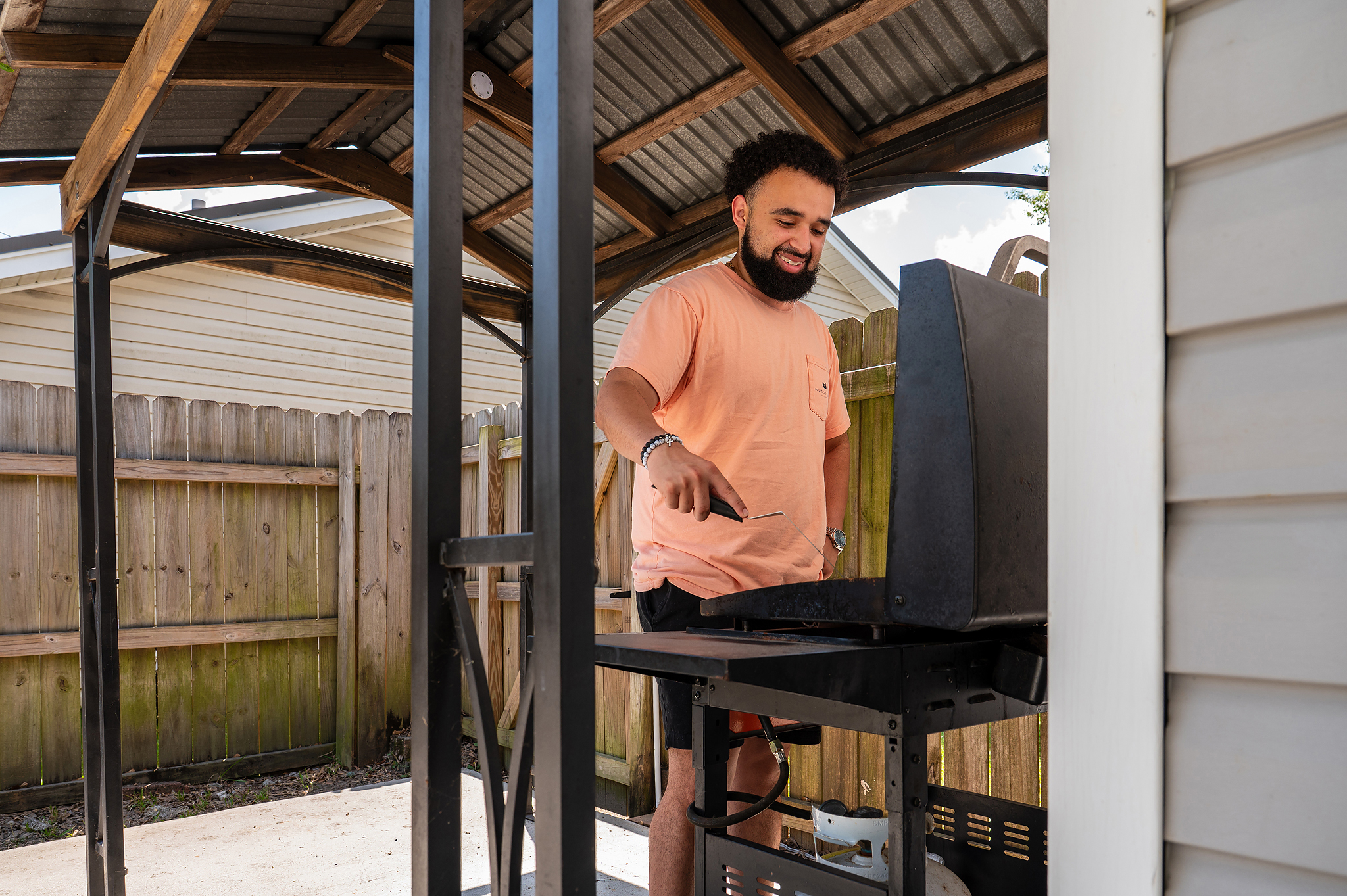
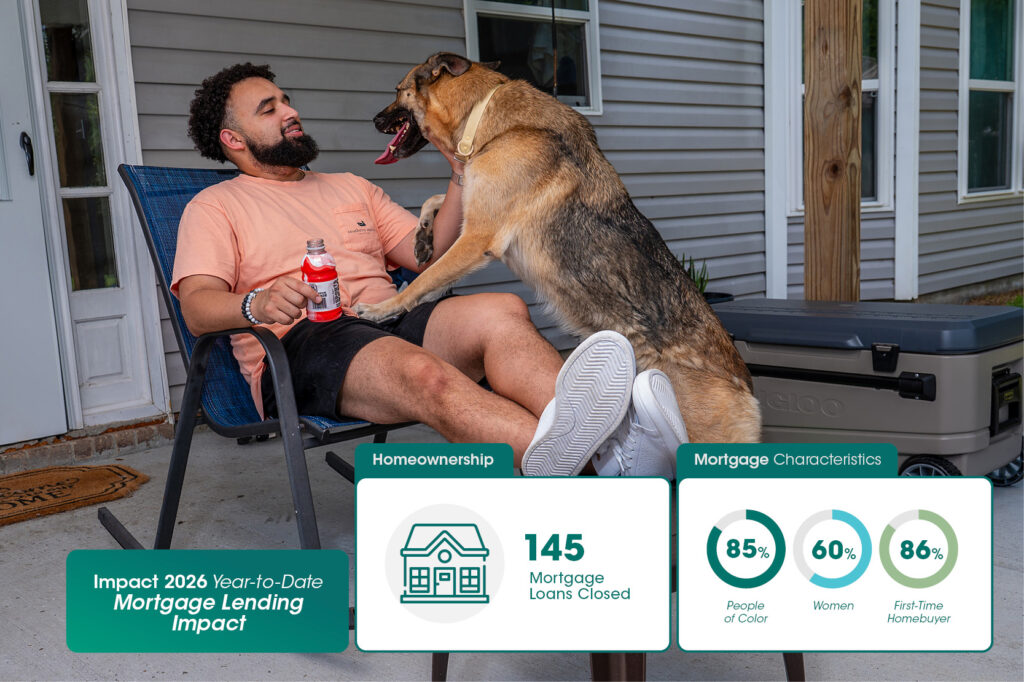
Originally from Honduras, Marlon Paz came to the United States at just one year old and later settled in Gulfport, Mississippi, after Hurricane Katrina. Homeownership had always been his dream, but as a Deferred Action for Childhood Arrivals (DACA) recipient, he faced significant obstacles securing a mortgage through traditional financing. DACA is a federal program that allows certain individuals brought to the United States as children to live and work legally through renewable protections. After learning he would need a much larger down payment, he paused his home search. Everything changed when a coworker introduced him to Hope Credit Union. After connecting with HOPE, Paz was quickly preapproved and resumed his search, eventually finding the home he had always envisioned. “There are so many people in a similar situation as me,” he says. “I’m grateful that HOPE opened the door for me.” Today, Paz’s story reflects how HOPE helps remove barriers to homeownership and expands access to opportunities for borrowers with unique circumstances.
In The Driver’s Seat
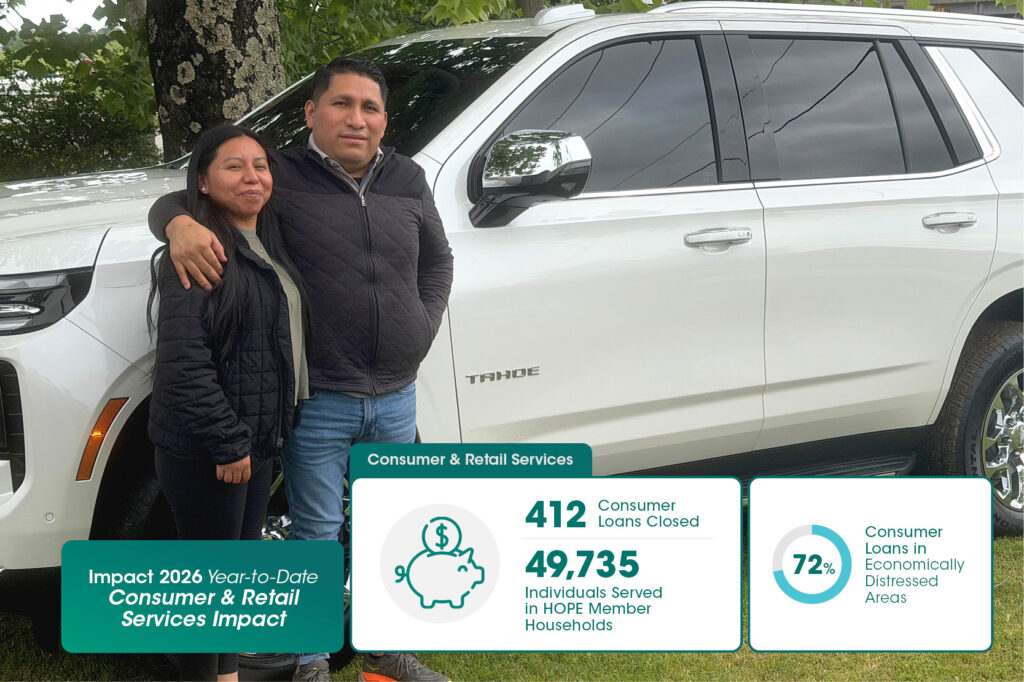
For many Americans, a car is more than transportation. It is the ability to get to work on time, to reach a doctor’s appointment without asking a favor, the simple dignity of moving through life on their own terms and their own schedule. A car is also the first major purchase many people make that requires financing, and applying for a loan can be an intimidating experience. When Margarita Pu Ordonez needed a reliable car that better suited her family’s needs, she turned to Hope Credit Union for an affordable auto loan that put her in the driver’s seat. Hope Credit Union offered the auto loan that allowed Ordonez to purchase her dream car. “HOPE made it possible for us to get the dream car we’ve been needing for our family,” says Margarita.
Bringing Compassionate Care Home
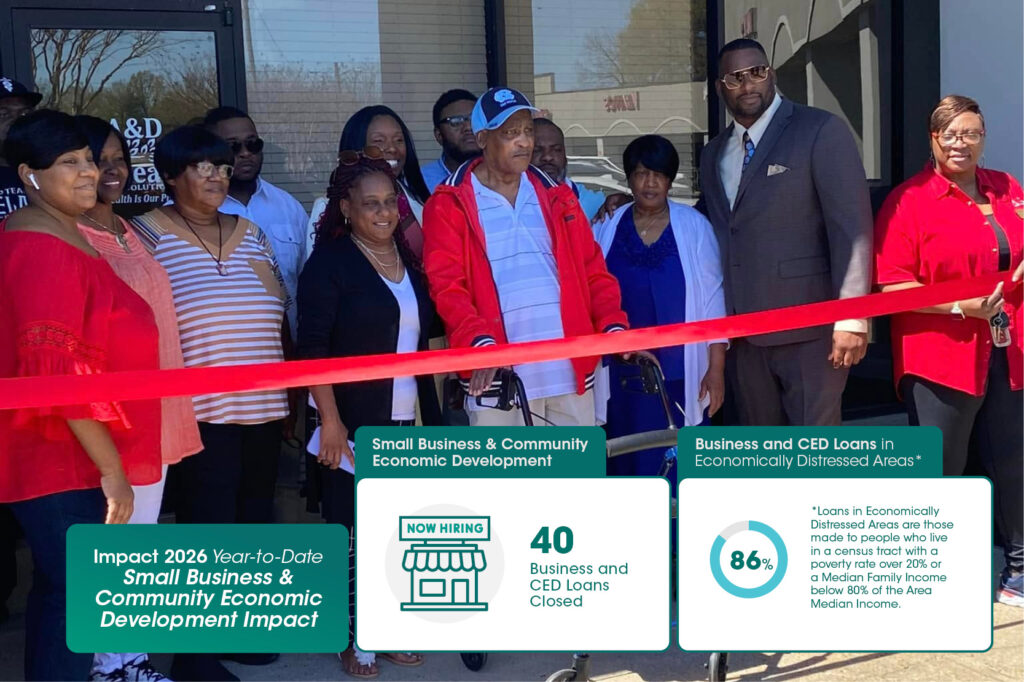
Natasha and Anthony Cunningham, who each worked 20 years in the healthcare field, turned their shared passion for caring for others into A&D Health Solution, a home healthcare agency dedicated to helping patients remain comfortable and independent in their own homes. The couple’s entrepreneurial journey was met with significant challenges, including a four-year federal moratorium that prevented new Medicare-certified home health agencies from opening in Arkansas. Once they received that approval, the Cunninghams connected with HOPE through a small business funding workshop in West Memphis, and found the financial partner they needed to move forward. Financing from HOPE, through the Goldman Sachs 10,000 Small Businesses Grow with Rural America Program, provided working capital for office space, accreditation, clinical equipment, and payroll, allowing the business to launch successfully. “After speaking with the HOPE associate at the event, I knew then that I wanted to do business with HOPE,” Mrs. Cunningham said. With HOPE continuing to support their growth, the Cunninghams plan to expand A&D Health Solution by adding medical transportation services.

HOPE Invests in Stillman College’s Next Chapter
As Stillman College celebrates its 150th anniversary, President Dr. Yolanda Page is leading the institution with a bold vision centered on preparing students from “cradle to career.” Through initiatives like its partnership with I Dream Big Academy, Stillman is creating pathways that introduce students to higher education early and reinforce the belief that college is within reach. And, HOPE has made an investment in the college’s vision. With HOPE’s $15 million in financing, the college is modernizing residence halls, addressing long-overdue campus improvements, and creating updated classrooms and laboratories that provide students with the hands-on learning experiences needed for internships and career readiness. These investments also strengthen the college’s long-term financial sustainability, allowing greater flexibility to invest in its future. Stillman has set an ambitious goal of enrolling 1,000 students by 2030, with a strong emphasis on both recruitment and retention.
Mississippi Delta Students Are College Bound
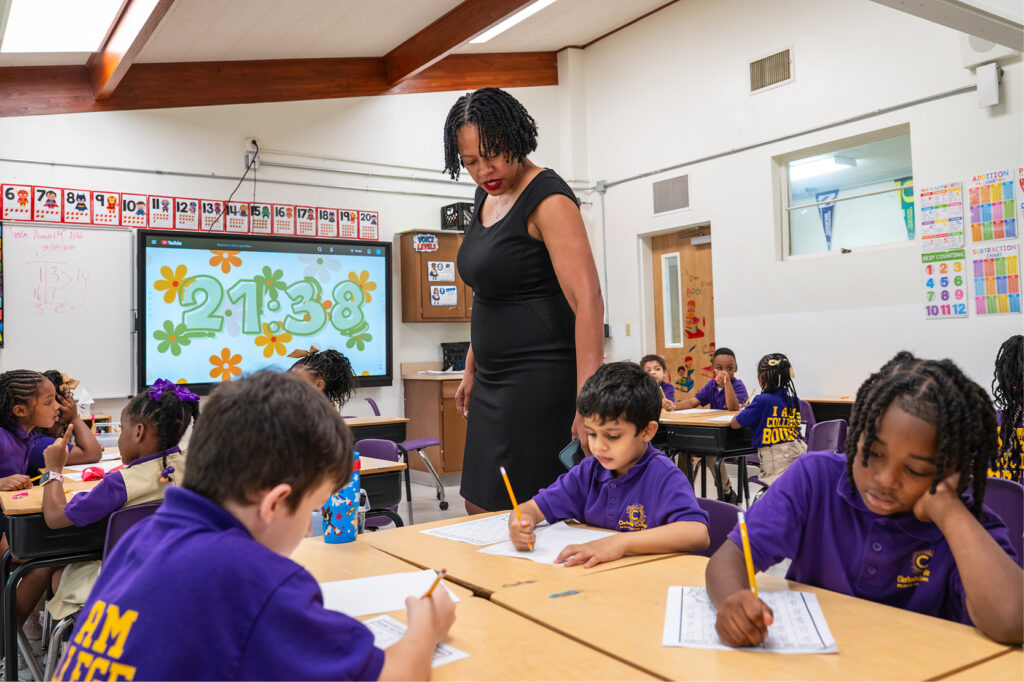
When Mississippi’s charter school legislation opened the door to new educational opportunities, longtime educator Amanda Johnson saw a way to transform student outcomes in the Delta. “When I looked at the quality of public schools in the Delta, I definitely saw room for high-quality education institutions to support children,” Johnson said. Drawing on two decades of experience, she founded Clarksdale Collegiate Public Charter School in 2018, with 150 students in kindergarten through second grade. Since then, the school has expanded annually, creating a rigorous, college-bound culture that encourages students to pursue higher education, technical careers, military service, or skilled trades. Recognizing the need for a permanent home, Clarksdale Collegiate partnered with HOPE to refinance debt for its growing K-6 campus, which includes newly constructed classroom buildings and a renovated church facility. Johnson described the partnership as seamless, noting that HOPE’s deep understanding of the Delta meant the value of investing in the community never had to be explained. Today, Clarksdale Collegiate serves students from kindergarten through 10th grade while planning a permanent campus for grades 7-12. Clarksdale Collegiate students consistently outperform peers at neighboring schools and the campus expansion has brought new construction and jobs to Clarksdale, demonstrating how investment in education strengthens both students and the communities they call home.
A Vision Realized Through Partnership
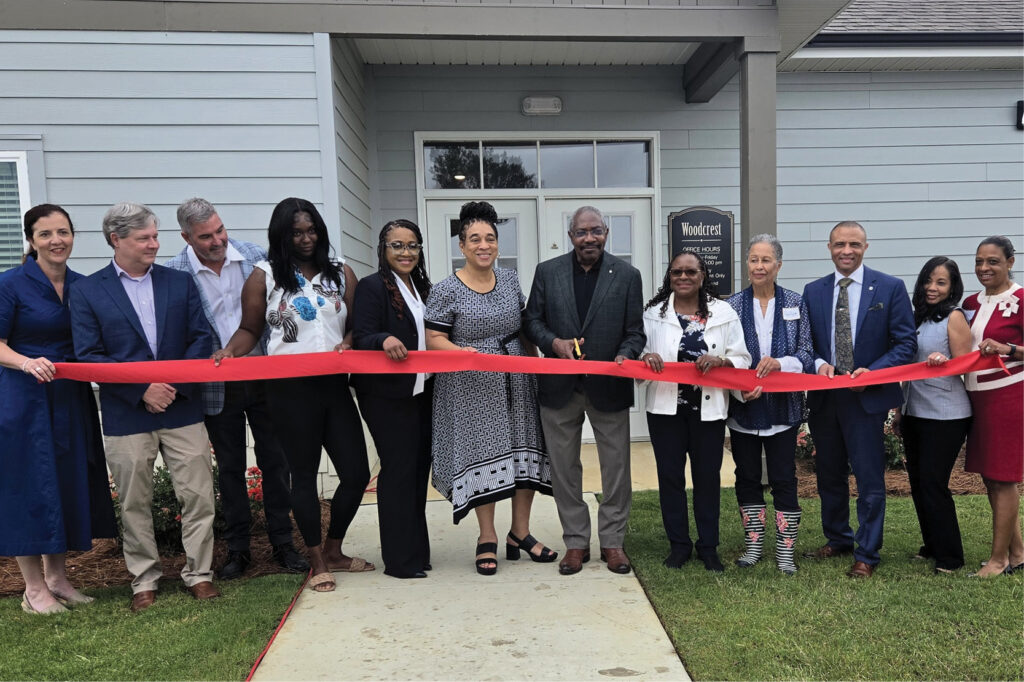
Members of the HOPE team joined community leaders on June 24 to celebrate the opening of Woodcrest Apartments in Jackson, Mississippi. Woodcrest Apartments is a powerful example of what can be achieved when mission-driven partners come together to invest in communities. HOPE celebrated this milestone alongside Rowanoak Development & Construction and the Jackson Housing Authority. The collaboration reflects HOPE’s ongoing commitment to expanding access to quality housing, strengthening neighborhoods and creating opportunities for families throughout the Deep South. Projects like Woodcrest do more than provide housing—they help create the stability, security, and opportunity that allow individuals and families to thrive.
Building and Preserving Homeownership in Birmingham
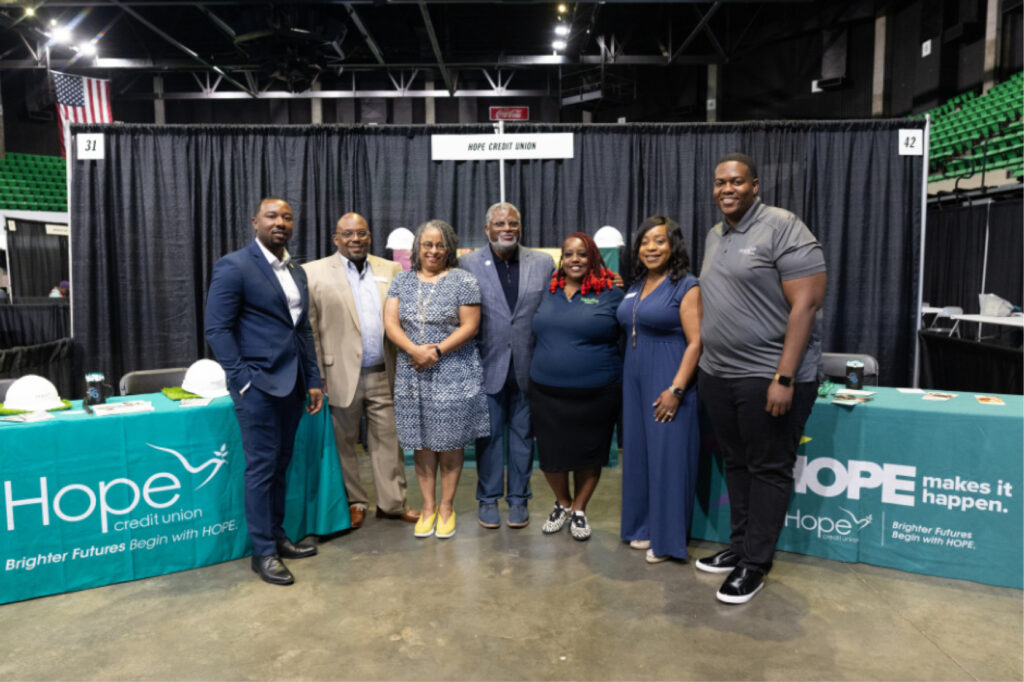
Homeownership remains one of the most powerful pathways to financial stability and generational wealth. In Birmingham, Alabama, HOPE is helping more families achieve and sustain homeownership through affordable mortgage financing, financial education and trusted community partnerships. HOPE has provided $2.9 million in mortgage financing in Birmingham, with 74% of loans supporting first-time homebuyers and 81% benefiting borrowers of color. These investments are expanding access to homeownership while helping families build wealth, strengthen financial security and create opportunities for future generations. As part of that ongoing commitment, HOPE was a major sponsor at the HomeWise Expo, hosted by Neighborhood Housing Services of Birmingham. HOPE CEO Bill Bynum, who served as honorary chair, highlighted the importance of preserving homeownership and strengthening neighborhoods while HOPE team members connected residents with mortgage products, financial education and tools to support long-term housing stability. By helping families not only achieve homeownership but keep it, HOPE is strengthening communities and creating opportunities that last for generations.
A New Chapter of Support for Families in Crisis
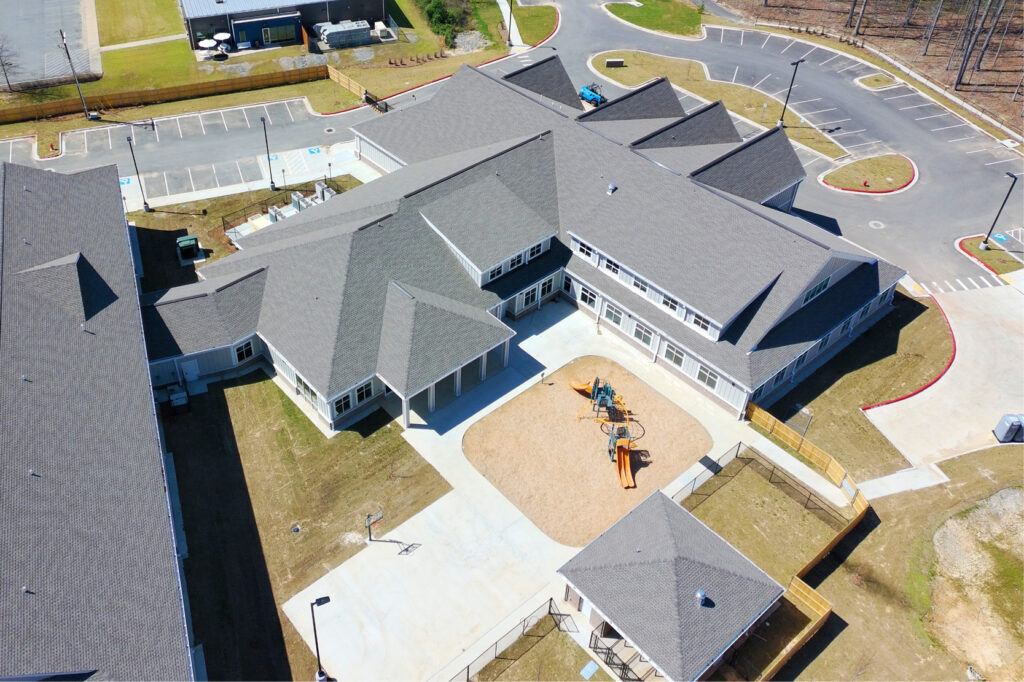
Families experiencing domestic violence often face a complex maze of challenges, from finding safe shelter to accessing healthcare, legal assistance and counseling. In Little Rock, Arkansas, a new collaborative model is helping make that journey easier. HOPE supported the development of the Forest of Hope Family Peace Center through a $9 million New Markets Tax Credit investment, alongside Regions Bank as the NMTC investor. The center was designed to transform how survivors access critical services by bringing 22 provider organizations together under one roof. The new facility more than doubles shelter capacity, expanding from 54 to 132 beds and creating greater access to safety and support for families in crisis. By centralizing services such as housing assistance, healthcare, legal aid and counseling, the center helps reduce barriers and connect survivors with the resources they need to rebuild their lives. At the ribbon-cutting ceremony, HOPE joined community partners in celebrating a new chapter of coordinated care, healing and opportunity for families across central Arkansas.