




Dear Friends,
Enterprise Corporation of the Delta (now Hope Enterprise Corporation) opened its doors in June 1994, followed 15 months later by the launch of Hope Community Credit Union in September 1995.
Building on three decades of impact, we reflect on, and draw lessons from those who paved the way. We recently connected with Don London, one of HOPE’s first mortgage borrowers. London, who still lives in, and owns free and clear, the home he purchased 23 years ago, underscored the fundamental premise of our work saying, “HOPE has proven that when given the opportunity, [people] build themselves and they can build their communities.” Put another way, when afforded opportunity and adequate resources, the capacity of Deep South residents is second to none.
Beyond providing financing to homebuyers, small businesses and families, HOPE’s resource toolbox also offers services to social entrepreneurs tackling injustice and tragedy.
Robert Jones was exonerated on his 44th birthday – after being wrongfully imprisoned for 23 years. HOPE provided financing to expand his business, a real estate company that provides quality, affordable housing in under resourced New Orleans neighborhoods.
The Women’s Advocacy Center serves more than two dozen survivors of domestic violence each month. When the organization needed help navigating lean months when donations were falling short, a HOPE a line of credit enabled the organization to continue to offer uninterrupted services at levels needed by its clients.
Whether investing in the launch of our homeownership program in 2002, or bolstering our ability to finance organizations that provide vital services in 2025, HOPE’s work is only possible through the support of friends like you.
As we move forward, the demand for HOPE’s services is greater than ever. In response, HOPE is embarking on an audacious goal – by 2035 to catalyze a thriving economic ecosystem that advances prosperity for families, communities, and everyday people throughout the Deep South. In the coming months we’ll share details about these plans and how you can be a part of the next stage of HOPE’s ongoing efforts to Strengthen Communities, Build Assets and Improve Lives. In the meantime, thank you for being a friend of HOPE.

Chief Executive Officer
Change of Address
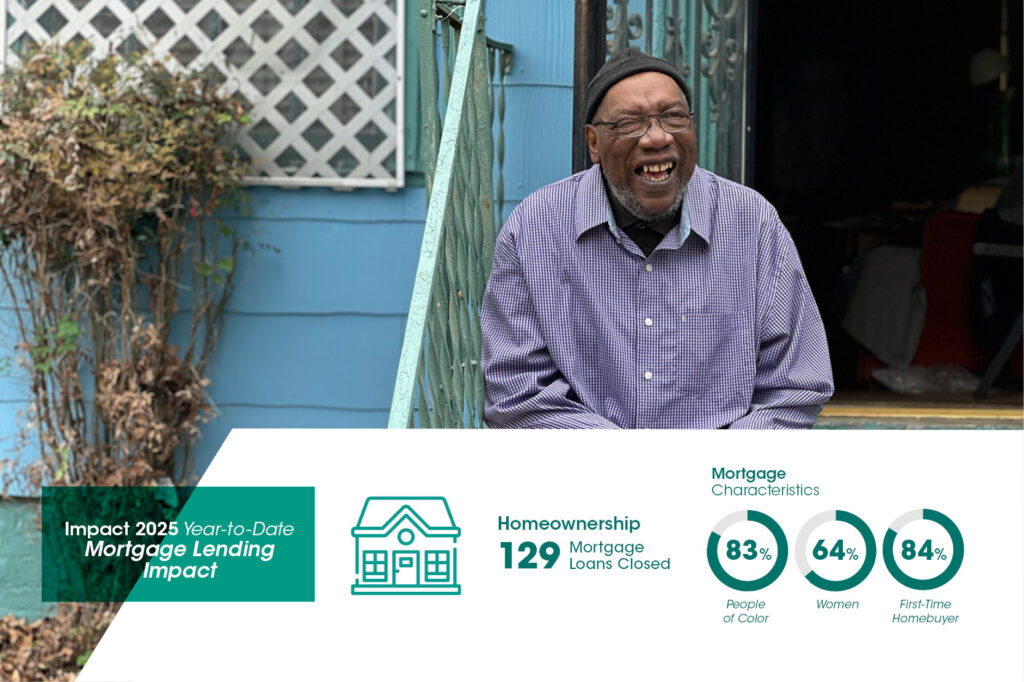
More than 20 years ago, Don London came to Stewpot Community Services in West Jackson as a homeless man struggling with addiction. There, he found more than food and shelter—he discovered purpose, employment, and support through Hope Credit Union. One of the first people to receive a HOPE mortgage loan, London transitioned from living in a shelter to owning a renovated home on Bratton Street, a once-blighted neighborhood Stewpot revitalized for its staff, many of whom had also experienced homelessness. HOPE recently reunited with London while writing a piece to commemorate the organization’s 30th anniversary.
“My biggest worry was that I had no credit, and there was no one who could vouch for the fact that I could be a responsible person. HOPE gave me that opportunity,” London says. “The sense of responsibility that this house was mine, the joy of that, is hard to put into words. I considered it a demonstration of how God loved me, and how I could trust other people to help me.”
Resilience Begins with HOPE
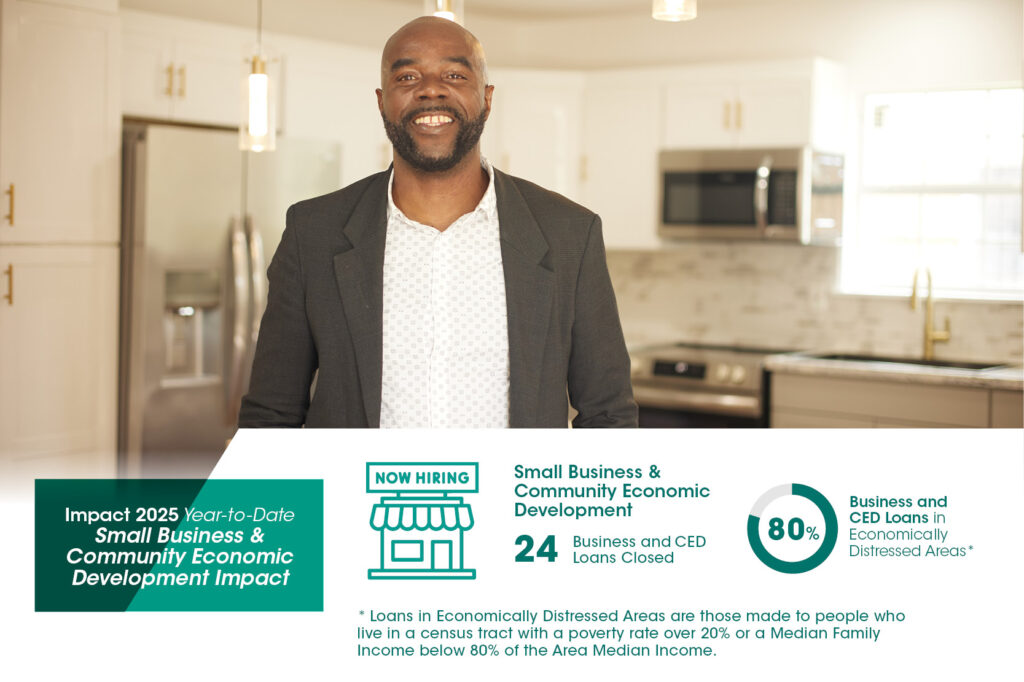
After spending over 23 years wrongfully imprisoned, Robert Jones was exonerated on his 44th birthday and dedicated his life to uplifting his community. In 2021, he founded Jones Property Group, a real estate company that renovates deteriorating homes in under-resourced New Orleans neighborhoods and offers them at affordable rates, often to people with housing vouchers. Supported by a loan from HOPE, Jones expanded his mission to provide quality housing with dignity.
“HOPE is a community financial organization,” Jones says. “Traditional banks can hand you too much red tape and it can be very discouraging. HOPE gives you opportunities and they make the process easy. I needed to find a trusted financial organization, one that I can build a lasting relationship with. I’ve found that in HOPE.”
He also co-founded the Free-Dem Foundation, mentoring youth and returning citizens in financial literacy and real estate, inspiring them to envision ownership and success. For Jones, rebuilding his community is not only service—it’s personal healing.

Providing Care and Support for Women and Children
Established in August 2018, the Women’s Advocacy Center is dedicated to empowering and supporting survivors of domestic abuse in rural and suburban Shelby County, Tennessee. The Center provides vital services not only to women who have experienced abuse but also to their children, assisting an average of 27 women and 37 children each month.
With a background in law and a career dedicated to protecting women’s rights, founding President and CEO Romona Jackson has made it her life’s mission to advocate for women and their children affected by domestic abuse. In Shelby County alone, approximately 15,000 domestic abuse cases are reported each year, including an average of five homicides linked to domestic violence. “As an attorney, I represented women from around the globe who had experienced gender-based violence, so this has always been a place where I’ve been very passionate,” said Jackson. “I feel as though I was called to do this work.”
Jackson first learned about HOPE at a community event, where she discovered that the organization partners with nonprofits. “The staff at HOPE just felt like family — everyone was friendly and genuinely wanted to help,” said Jackson. The Women’s Advocacy Center relies on donations and grant funding, and when donations fall short, a line of credit can be a solution to support operations. With HOPE, Jackson secured a $25,000 line of credit. Later, she requested an increase, and HOPE doubled the credit line to $50,000. “The line of credit from HOPE will add a layer of security to our organization — for those times when we need to offer assistance to the women in our center,” said Jackson.

Driving with Confidence
Tunya Collins enjoys being there for her family, whether its transporting her grandchildren to their various activities or traveling for family vacations. “My grandkids are very active in school and I needed a vehicle that could keep up with their busy schedules,” said Collins. When her 30 year old vehicle would have an issue, it limited her mobility. Collins first learned about HOPE’s products and services from a brochure she picked up at a local branch. She inquired about an auto loan and the friendly HOPE staff explained what her options were. HOPE began working on Collins credit by offering her a Borrow and Save loan. After paying it off, she then came back for an auto loan. “I’m grateful for HOPE for sticking with me throughout the process and answering all my questions,” said Collins. She now has a reliable vehicle that she can feel confident traveling with her family.

Saving for College
While still repaying her student loans, Deidra Williams and her husband, who once struggled financially and lived paycheck to paycheck, committed to setting their children up for a better future by educating themselves about finances and starting college savings early. After learning about a savings program offered through her daughter’s daycare—backed by Hope Credit Union, the City of Jackson, and the Mississippi Community Financial Access Coalition—Williams enrolled her four-year-old daughter, Samyra. He contributed $100 monthly through direct deposit while participating in financial education courses. Thirteen years later, that consistent saving grew into a five-figure fund that, along with scholarships, will help Samyra attend Mississippi Delta Community College to pursue her dream of becoming a pediatric dental hygienist. Williams continues to save for Samyra and has opened accounts for her two younger sons, proud to give her children the financial foundation she didn’t have.
“It makes me proud that my husband and I have been able to do this for our children,” Williams says. “I was the first person in my family to go to college, and I learned about student loans the hard way. I want my children to have a different experience. This program from HOPE and that $100 a month were a good way to start.”

Educating Tomorrow’s Leaders
In May 2023, Talladega College, a 158-year-old historically Black college in Alabama, and one of the region’s largest employers, faced a pressing need to consolidate debt and improve its cash flow. Recognizing the college’s vital contributions to region’s economy, HOPE provided Talladega with a $15 million working capital loan that enabled leadership to implement plans to stabilize operations and build a foundation for future growth.
This investment reflects HOPE’s broader commitment to supporting historically Black colleges and universities (HBCUs) and other anchor institutions that drive economic mobility in underserved communities. Beyond financial support, HOPE aims to empower these institutions, their employees, and surrounding communities, viewing their success as integral to the nation’s economic future. Leaders at Talladega College emphasized that HOPE’s backing not only improved morale but also increased national engagement and recognition for the institution. While challenges remain, the support has given Talladega a renewed opportunity to continue its historic mission of uplifting students and contributing to society.
“To have HOPE invest in our institution has been a blessing,” says Lewis-Payton. “I am an alumna of Talladega College and a first generation college student, so this is personal for me. I want to make sure this institution remains in place for students like me, who without Talladega College, might not be able to beat the negative statistics by rising out of poverty.”

HOPE Receives 2025 CARE Award
Since its founding, HOPE has been committed to turning possibility into progress for communities across the Deep South. That commitment was recognized when HOPE was named the 2025 Community Area Revitalization Efforts (CARE) Award recipient by the Federal Home Loan Bank of Dallas. Each year, this award recognizes a member institution that uses FHLB Dallas programs to support affordable housing and community development—and this year, they chose HOPE.
Through programs like the Special Needs Assistance Program, which funds essential home repairs for low-income individuals with special needs, and the Home Equity Leverage Partnership, which provides down payment support for first-time homebuyers, HOPE has been able to help families build stability and security. HOPE leveraged the FHLB Dallas Affordable Housing Program to develop safe, affordable housing across the region. The CARE Award comes with a $15,000 donation that HOPE will use to further advance homeownership
in Deep South communities.

HOPE Appoints New Presidents to Lead in Growth and Impact
HOPE (Hope Enterprise Corporation/Hope Credit Union) has appointed Cassandra Williams as President of Hope Credit Union and Ed Sivak as President of Hope Enterprise Corporation, while Bill Bynum continues as CEO. These leadership changes follow a record-breaking year in which HOPE deployed over $210 million for community development in the Deep South, leading the nation in loan growth among peer credit unions and ranking third in net worth ratio. Williams, a 25-year HOPE veteran, will oversee retail, mortgage, commercial, and economic development operations, building on her success as Chief Lending Officer. Sivak, who joined in 2001 and founded the Hope Policy Institute, will lead investor relations, advocacy, human assets and corporate administration. Both leaders bring a wealth of experience and vision to advance HOPE’s mission of expanding economic opportunity in underserved communities.